
Category: Tyres | 5 min read
In Formula 1 every car must use at least two different tyre compounds during a dry race. That single rule creates more strategic variety than almost anything else in the sport.
Choose the right tyres at the right time and you can gain three positions without a single overtake. Choose wrong and your race is over before it begins.
The Tyre Supplier
Since 2011 Pirelli has been the sole tyre supplier in Formula 1. That means every team on the grid uses the same tyres. The difference is not the rubber. It is knowing when and how to use it.
The Dry Compounds
Pirelli brings three dry tyre compounds to each race weekend. They are colour coded so fans and teams can see at a glance what each car is running.
Soft tyres are marked in red. They are the fastest compound but they wear out the quickest. A soft tyre can be blindingly fast for 15 to 20 laps before the performance falls off a cliff.
Medium tyres are marked in yellow. They offer a balance between speed and durability. Most drivers find the medium the most versatile compound and it is often the tyre of choice for race strategy.
Hard tyres are marked in white. They are the slowest compound but they last the longest. A hard tyre can run for 30 or even 40 laps without significant degradation. They are the tyre you choose when you want to go long.
The Wet Compounds
When it rains Pirelli offers two additional compounds.
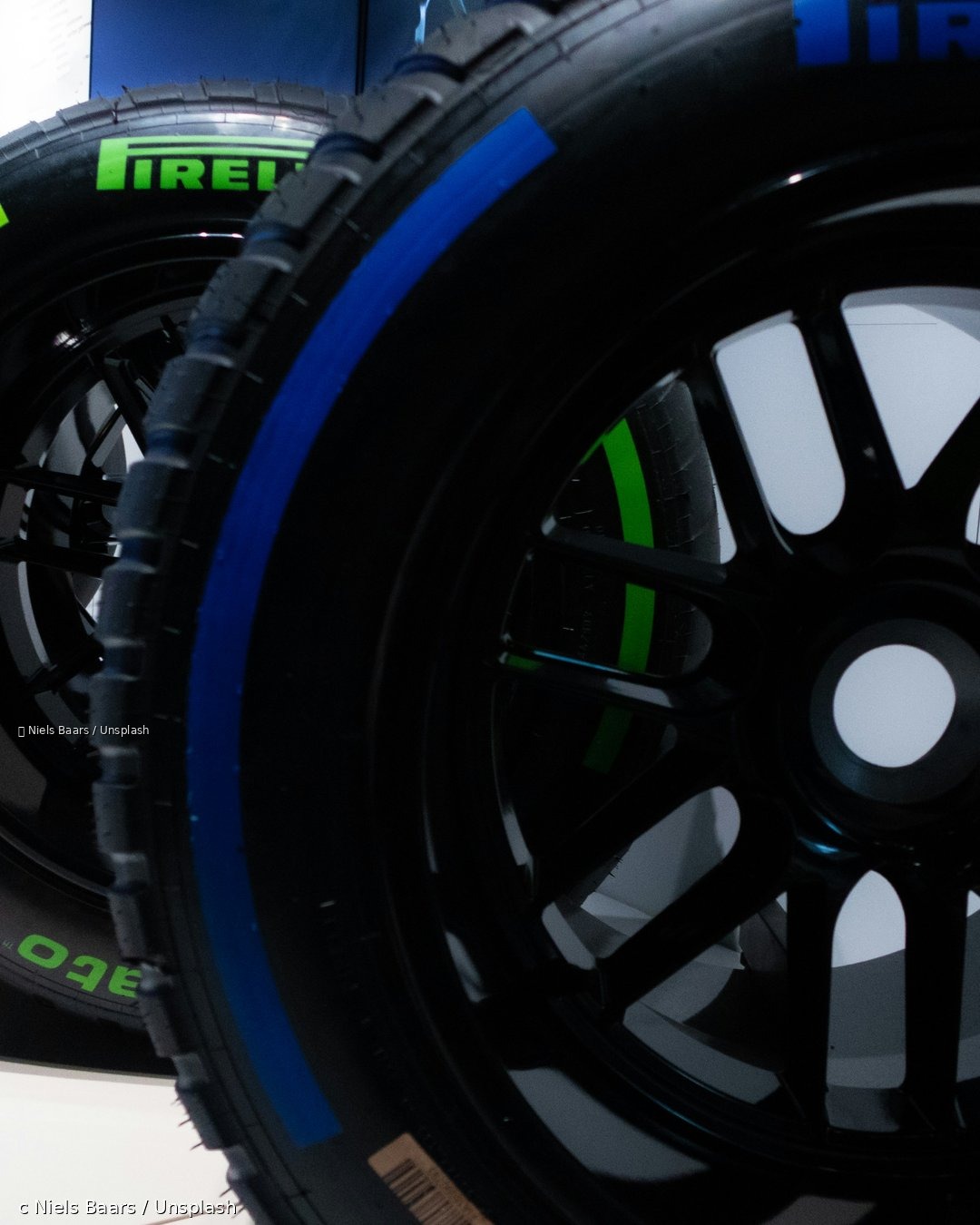
Intermediate tyres are marked in green. They are designed for a damp but not fully wet track. The crossover from slick to intermediate is one of the hardest calls in motorsport. Too early and you lose time. Too late and you crash.
Full wet tyres are marked in blue. They are used in heavy rain and standing water. Full wets are rarely seen in modern Formula 1 because races are often stopped in extreme conditions.
Tyre Degradation
Every tyre degrades over time. As the rubber wears down the car gets slower. Degradation is affected by track temperature, driving style, car setup and the compound itself.
Teams model tyre degradation before the race and during it. They know approximately how many laps each compound will last and they plan their strategy around those numbers.
The problem is that models are never perfect. A driver who pushes too hard in the opening laps can destroy a set of tyres in ten laps that should have lasted twenty.
The Two Compound Rule
Every driver must use at least two different compounds during a dry race. This rule forces teams to make at least one pit stop and creates the strategic variety that makes Formula 1 so unpredictable.
A common strategy is to start on soft tyres for maximum early pace, then switch to hards for a long final stint. But there are dozens of variations and teams spend hours before the race modelling every possibility.
What Would You Do?
Scenario: It is lap 20 of 55. Your driver is P3 on soft tyres that are 18 laps old and starting to degrade fast. You have one set of mediums and one set of hards remaining.
Do you:
A. Pit now for mediums and try to run to the end B. Push for 3 more laps then pit for hards C. Stay out as long as possible and hope for a safety car
Next: The Undercut — What Is It and When Does It Work?