
Category: Strategy | 5 min read
One moment you have a comfortable ten second lead. The next a marshal waves a yellow flag, the safety car pulls out of the pit lane and your entire race strategy is torn up and rewritten in real time.
Nothing in Formula 1 reshuffles the order quite like a safety car. For some drivers it is a gift. For others it is a disaster. The difference is almost always strategy.
What Is the Safety Car?
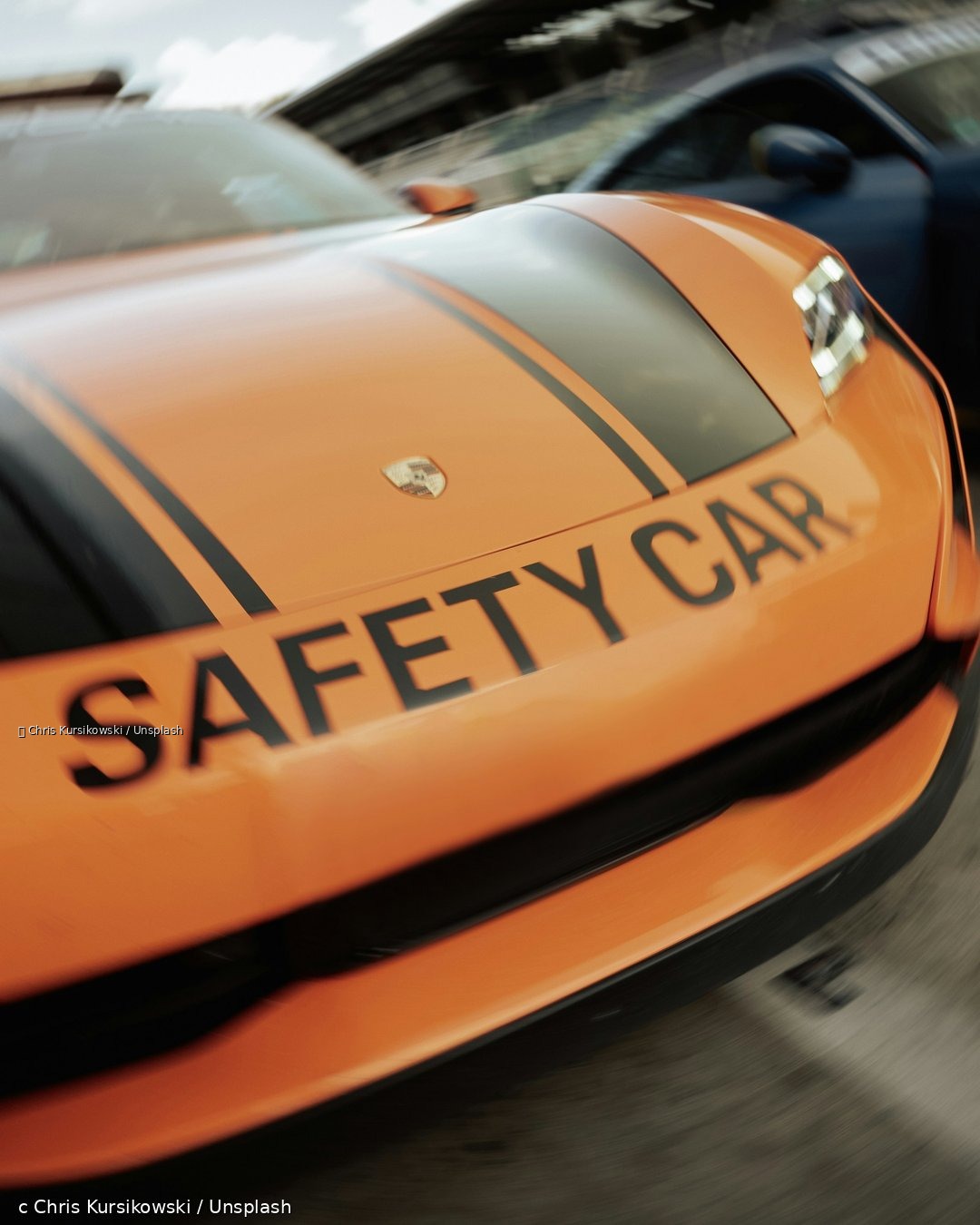
When there is an incident on track that requires marshals to work near the racing surface the safety car is deployed. All cars must slow down and form a queue behind the safety car. Overtaking is not permitted.
The safety car stays out until the track is clear. Then it peels into the pit lane and racing resumes.
The entire field is bunched together behind the safety car regardless of how large the gaps were before. A ten second lead becomes a one second lead in an instant.
The Virtual Safety Car
The virtual safety car or VSC is a less severe version. Instead of a physical safety car all drivers must slow to a set delta time and maintain it. There is no physical car leading the field.
The VSC is used for smaller incidents that require caution but not a full neutralisation. It typically lasts only a few laps.
Why the Safety Car Changes Everything
Under normal racing conditions a pit stop costs approximately twenty to twenty five seconds compared to a lap at full speed. That time loss is what makes pit stop timing so difficult.
Under a safety car that equation changes completely. Because all cars are slowed down the time lost during a pit stop drops to as little as five to eight seconds. Suddenly pitting is almost free.
This means teams that were planning to stay out can now pit for fresh tyres at almost no cost. And teams that have already pitted find that their rivals are now doing the same for nothing.
The safety car compresses the field and resets the strategy in one move.
The Dilemma
When the safety car comes out every team faces the same dilemma immediately.
If you pit you get fresh tyres but you may come out in traffic behind cars that stayed out. You will have pace but you may not have the track position to use it.
If you stay out you maintain track position but you will be on older tyres than the cars behind you. In the closing laps those cars will be faster and hunting you down.
There is no universally correct answer. It depends on your tyre age, your position, how many laps remain and crucially what your rivals decide to do.
The One Lap Too Late Problem
One of the most painful moments in Formula 1 strategy is being one lap too late on the safety car call.
The safety car is deployed. Your strategist hesitates for one lap trying to gather more information. The car behind you pits immediately. You pit the next lap. But in that one extra lap your rival has already entered the pit lane ahead of you. You both rejoin at roughly the same time but they are ahead.
One lap of hesitation cost you a position. It happens more often than fans realise.
Who Benefits Most?
Generally the cars that benefit most from a safety car are those that are running outside the points or far behind the leader. A safety car gives them a free lap to close the gap and reset their strategy.
The car that suffers most is usually the race leader. A large gap built up over thirty laps disappears in an instant. The pressure resets and the race starts again.
What Would You Do?
Scenario: Lap 42 of 57. Safety car deployed. You are P1 with a 9 second gap to P2. Your tyres are 28 laps old. There are 15 laps remaining after the safety car period ends.
Do you:
A. Pit for fresh tyres and rejoin in traffic hoping your pace carries you back through B. Stay out and protect track position on older tyres C. Wait one lap to see what your rivals behind you decide before committing
Next: Team Radio — What Are They Actually Saying?