
It is lap 40. You are leading the race. Your tyres are worn but manageable. The gap to second place is eight seconds. You have fifteen laps to go and the race is under control.
Then a car stops on track. Yellow flags. Marshals on the circuit.
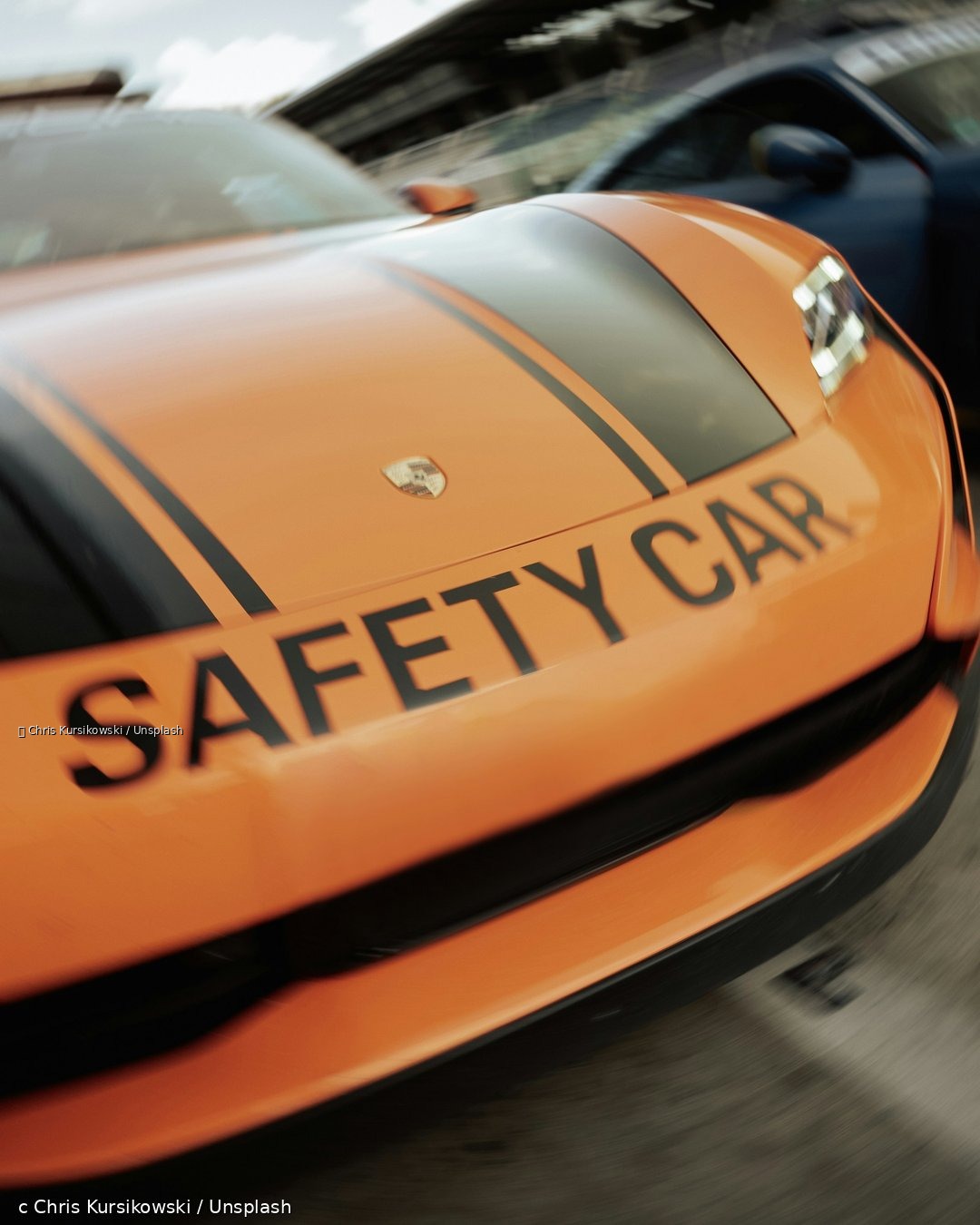
Safety car deployed.
In the space of about ten seconds, your eight second lead becomes worthless. The entire field closes up behind you. And now you have to make the most important decision of your race with almost no time to think.
What the Safety Car Actually Does
Most people watching Formula 1 understand that the safety car slows everything down. What is less obvious is what it does to strategy.
Under normal racing conditions, a pit stop costs you roughly 20 to 25 seconds of track time depending on the circuit. That time loss is significant. It is the reason teams spend so much effort calculating the perfect moment to pit, because every second matters when the cars around you are still running at full speed.
Under the safety car, that calculation changes completely.
When the safety car is out, everyone is driving at reduced speed. The gaps between cars collapse. The time you lose in the pit lane is now much smaller relative to the speed of the race, because the race is not really happening at full speed anymore. Pitting under the safety car can cost you as little as five to ten seconds of effective track position loss instead of the usual twenty-five.
This is why the safety car is simultaneously the best opportunity and the biggest threat in Formula 1, depending on where you are in the race and what decision you make in the next thirty seconds. (Source: formula1.com)
The Driver Who Benefits and the Driver Who Loses
Not everyone gains from a safety car period. Where you finish depends almost entirely on whether your team reacts faster than the teams around you.
If you are leading and your tyres are worn, the safety car is a gift. You can pit, take on fresh rubber and come back out still near the front with tyres that will be faster than everyone around you for the remaining laps. The cost of pitting is minimal. The benefit is significant.
If you have just pitted on the lap before the safety car comes out, you are in the worst possible position. You have already paid the full time cost of a pit stop under green flag racing. The cars that were behind you have now pitted under the safety car at a fraction of the cost and come out level with you or ahead of you. Something that was completely out of your control just cost you several positions.
This is the part of Formula 1 that feels deeply unfair when you are the driver on the wrong side of it. And it happens multiple times every season. (Source: fia.com)
The Three Second Window
When a safety car is deployed, teams typically have one, maybe two laps to decide whether to pit or stay out. The pit lane entry closes before the safety car reaches it on the first lap, which means if you miss that window you are committed to staying out until the next opportunity.
Strategy engineers describe this as a three second decision. The data is incomplete. The safety car reason might be a quick clean-up or a lengthy recovery operation and nobody knows which yet. The rivals behind you are making their own calls simultaneously. And the pit wall has to commit before any of that becomes clear.
Teams that get this right consistently do so because they have pre-built scenarios for exactly this situation. Before every race, strategy engineers model safety car deployments at different points in the race and decide in advance what the response will be. When it actually happens, they are not thinking for the first time. They are executing a plan they already made. (Source: motorsport.com)
The Virtual Safety Car
Since 2015, Formula 1 has also used the Virtual Safety Car, or VSC. Instead of deploying the physical safety car, the VSC instructs all drivers to slow to a minimum delta time per sector while an incident is cleared.
The VSC creates a similar strategic opportunity to the real safety car but with slightly different dynamics. The time loss in the pit lane is reduced but not as dramatically as under a full safety car. Teams that identify the VSC window quickly and pit immediately gain a meaningful advantage. Teams that hesitate by even one lap often find the window has closed and the opportunity is gone.
Both the safety car and the VSC reward preparation and penalise hesitation. In a sport where the difference between winning and losing is often measured in fractions of a second, thirty seconds of indecision can end a race. (Source: fia.com)
What Would You Do?
You are on Lap 40 of 55. You are in second place, six seconds behind the leader. Both of you are on tyres that have around twelve laps of life left. The safety car has just been deployed.
Your engineer comes on the radio:
„Safety car is out. We have one lap to decide. If we pit now we come out in fourth on fresh tyres with thirteen laps to hunt down the cars ahead. If we stay out we keep second place but on older rubber than the cars that pit. The leader will almost certainly stay out to protect position. Your call.“
Do you pit and trust that fresh tyres will get you back to the front, or stay out and protect second place?
Leave your answer in the comments. This is the decision that ends careers and starts legends.
Next up: Team Radio, what are they actually saying out there?
Sources:
- Formula 1 Safety Car Regulations: https://www.formula1.com/en/latest/article/strategy-explained.html
- FIA Formula 1 Sporting Regulations: https://www.fia.com/regulation/category/110
- Motorsport.com Safety Car Strategy Analysis: https://www.motorsport.com
- Pirelli Tyre Performance Under Safety Car: https://www.pirelli.com/tyres/en-ww/motorsport/f1/technology/