
Category: Strategy | 5 min read
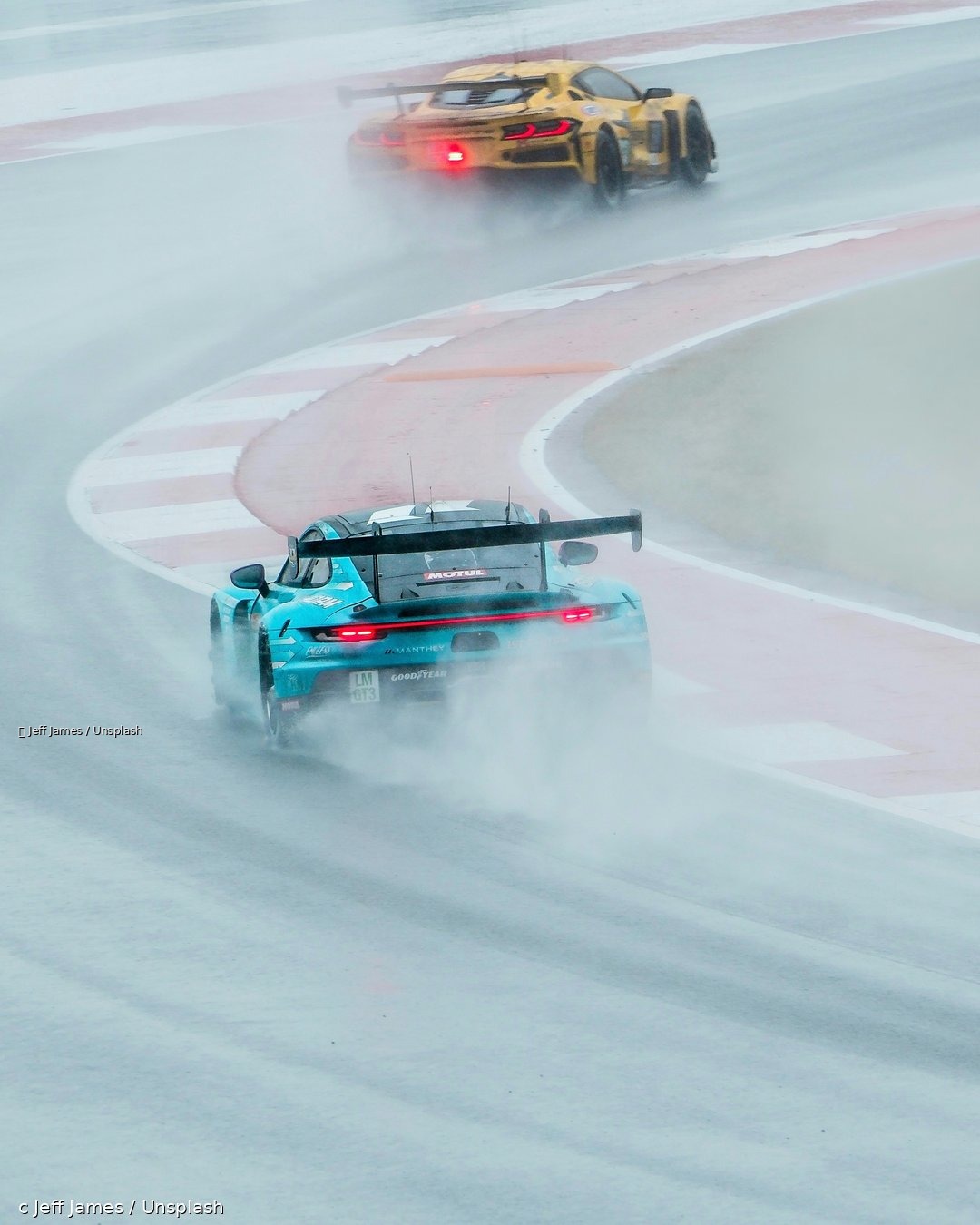
Rain changes everything in Formula 1. The fastest car is no longer guaranteed to win. The most experienced driver can make a mistake that ends their race in an instant. And the strategist who makes the right call at the right moment can turn a midfield car into a race winner.
Wet weather racing is the most unpredictable and most exciting form of motorsport strategy. And it all starts with one question.
When do you change the tyres?
The Wet Tyre Compounds
In dry conditions teams choose between soft, medium and hard tyres. When it rains two additional compounds become available.
Intermediate tyres are the most commonly used wet weather tyre. They have a grooved tread pattern that channels water away from the contact patch. They work best on a damp track that is not fully soaked. Too dry and they overheat. Too wet and they cannot clear enough water.
Full wet tyres are designed for heavy rain and standing water. They displace significantly more water than intermediates and provide grip in conditions where intermediates would simply aquaplane. Full wets are rarely seen in modern Formula 1 because races are often suspended in truly extreme conditions.
The Crossover Point
The most critical decision in wet weather strategy is the crossover point. This is the moment when conditions are wet enough that intermediate tyres are faster than slicks or dry enough that slick tyres become faster than intermediates.
Getting the crossover right can gain you thirty seconds in a single lap. Getting it wrong can send your driver into the barriers.
The problem is that the crossover point is almost impossible to predict precisely. Track temperature, rainfall intensity, wind direction and the racing line all affect how quickly the track dries or wets up. Teams rely on weather radar, tyre engineers and driver feedback to make the call.
The Gamble
In wet conditions the boldest strategy is almost always to be the first to change tyres.
If you are the first team to switch to intermediates when the rain starts you gain a massive advantage over the cars still on slicks. Every lap they stay out on the wrong tyre they are losing time and taking a huge risk.
But if you pit too early and the rain stops you are now on intermediates on a drying track. Your tyres will overheat and degrade rapidly. You will need to pit again sooner than expected and you lose all the time you gained.
The gamble is real. The reward is enormous. The risk is equally large.
Playing It Safe
The conservative approach is to wait for clear information before changing tyres. Let another driver switch first and see how their pace compares. If they are significantly faster the call becomes obvious.
The problem with playing it safe is that by the time the picture is clear the window may have already closed. The bold team that pitted three laps earlier is now ten seconds up the road and pulling away on fresh rubber.
In wet weather strategy hesitation is almost always punished.
The Double Change
Sometimes conditions change so rapidly that teams need to make two tyre changes in quick succession. A driver pits for intermediates as rain begins. Five laps later the rain intensifies and they need full wets. Three laps after that the rain stops and they need to get back to slicks.
Each additional pit stop costs time and track position. Teams that manage a rapidly changing race with the fewest stops often come out ahead even if each individual call was not perfect.
Driver Feedback
In wet conditions driver feedback becomes more important than at any other time. The data can only tell the engineers so much. The driver is the one feeling how the car is moving, how much grip is available and how close to the limit they are.
A driver who communicates clearly and accurately in wet conditions gives their team a massive advantage. A driver who panics or gives unclear feedback can cost the team a crucial decision at exactly the wrong moment.
What Would You Do?
Scenario: Lap 12 of 60. Light rain begins. The track is damp but not fully wet. Everyone is currently on slick tyres. Your driver is P4 and reports the car is starting to feel nervous in the corners. Weather radar shows heavier rain arriving in approximately four laps.
Do you:
A. Pit immediately for intermediate tyres and be the first to make the switch B. Stay out on slicks for two more laps and monitor the situation C. Tell the driver to push on and wait for the heavier rain before reacting
Next: The Final Lap — Putting It All Together